
The Federal EV Charger Credit Ends June 30. Some can still claim it.
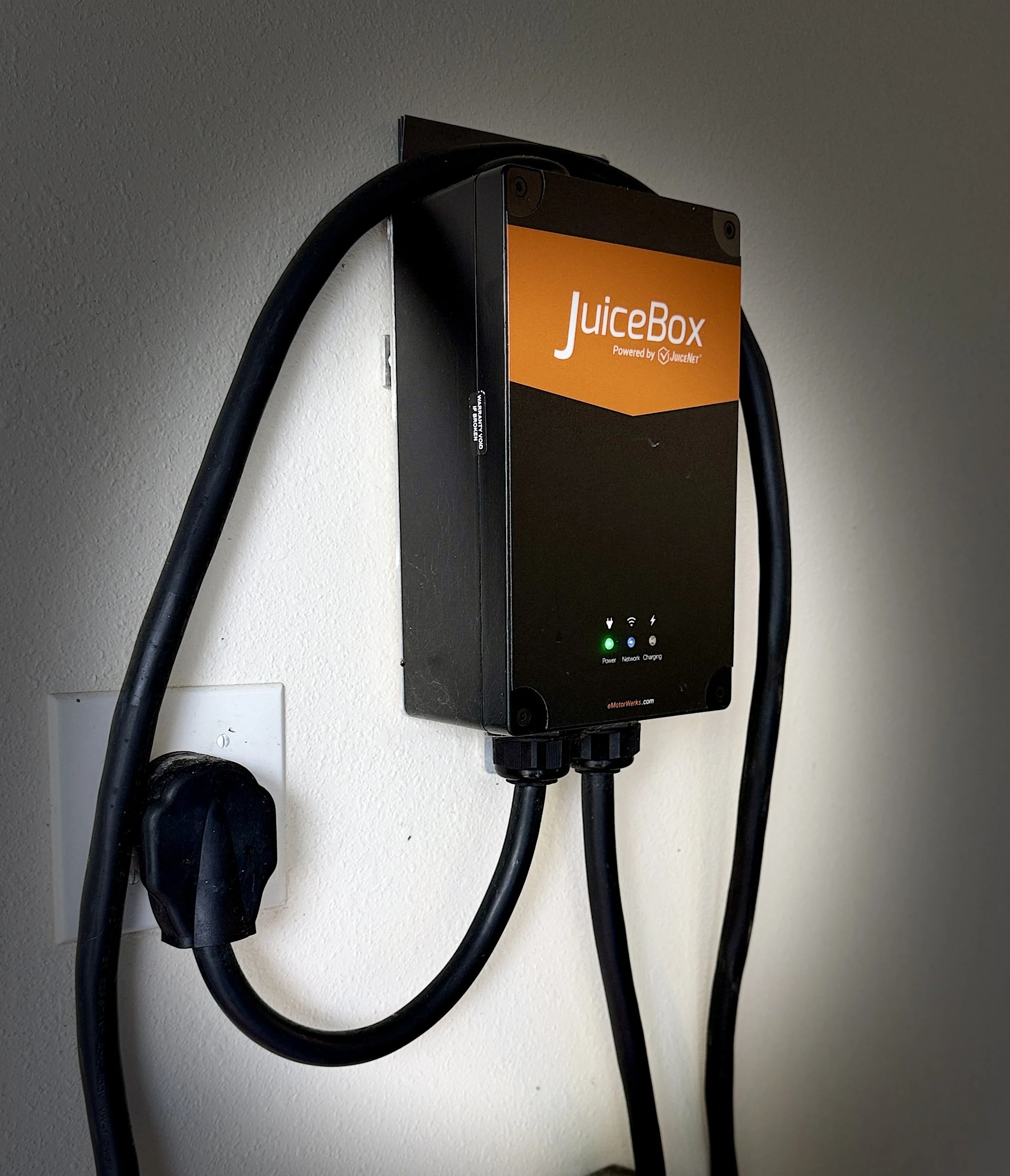
If you’re planning to install a home charger or are in the process of installing a commercial charger, you’ve got a few weeks left to take advantage of a federal tax credit. The federal government will pay 30% of the cost of an EV charger installation. The opportunity ends in 4 weeks.
The credit is provided under Section 30C of the tax code, which Congress passed in 2005, and the Inflation Reduction Act extended through 2032. Last year, the One Big Beautiful Bill Act moved the expiration to June 30, 2026.
Tax credit benefit.
Homeowners: Tax credit of 30% of the cost of the equipment and the related installation, capped at $1,000. This includes the cost of the Level 2 charger, wiring, and any required electrical panel work.
Commercial (business, multifamily property, or fleet): The base credit is 6% of the project cost, capped at $100,000 per port. The credit increases to 30% if the installation meets federal prevailing-wage and apprenticeship requirements. This covers Level 2 and DCFC installations.
The federal tax credit can be stacked on local incentives. Hawaii Energy offers up to $4,500 for a new commercial dual-port networked Level 2 charger, and $35,000 for a new DCFC. Kauai’s KIUC offers a $500 residential rebate for a Level 2 installation.
Location matters.
The tax credit only applies if the charger is installed in an “eligible census tract,” a non-urban area, or a low-income community. Most of Hawaii qualifies on one or both tests.
All of Molokai qualifies. All of Lanai qualifies. The 2020 Census designated no urban areas on either island.
On Hawaii Island, most of the land outside the Hilo and Kailua-Kona urban cores qualifies. That includes Ka'u, Puna outside Pahoa town, the Hamakua Coast, North Kohala, Waikoloa Village, and South Kona. Parts of Hilo and Kailua-Kona also qualify under the low-income test.
On Maui, most of the land outside the Kahului-Wailuku urban core qualifies. East Maui (Hana, Keanae), Upcountry (Kula, Ulupalakua), and West Maui beyond Lahaina town (Napili, Kahana, Kapalua) are all in.
On Kauai, most of the island outside Lihue and the Wailua-Kapaa urban area qualifies. The North Shore, the west side beyond Kekaha, Koloa, and Anahola, is eligible.
Oahu is the most restrictive. The Honolulu Urban Area covers the south shore from Hawaii Kai through Kapolei. The North Shore, deep Waianae Coast, and rural windward Oahu qualify on the non-urban test. Within the urban area, Kalihi, Chinatown, Waipahu, the Waianae Coast (Nanakuli, Maili, Waianae town), and parts of Wahiawa qualify on the low-income test.
You can easily determine if your address qualifies, using the Department of Energy's Address-Lookup Tool at anl.gov/esia/refueling-infrastructure-tax-credit. Type in the install address, get the 11-digit census tract identifier, and the tool tells you whether it qualifies.
IMPORTANT: For definitive advice on this tax credit, contact your tax professional.
June 30 deadline
In addition to meeting the location requirements, the charger must be installed, energized, and ready to charge an EV by June 30, 2026. A homeowner with a simple Level 2 install may have enough time. The deadline is too tight for a new commercial project, unless permits are already secured and equipment is on site. DCFC installations are out of scope, unless they're already installed, energized, and scheduled for an inspection soon. Remember to keep receipts, invoices, eligibility documentation, and proof of the project completion date to support the federal claim.
Coordinate project timing and documentation closely with your electrical contractor to ensure eligibility requirements are met.
Regardless of your eligibility for the tax credit, don’t forget to take advantage of the Hawaii Energy commercial EV charger rebate and, for Kauai residents, the KIUC residential EV charger rebate.
Resources:
The Federal EV Tax Credit And Other EV Incentives In 2026, Coltura, May 2026, https://coltura.org/ev-tax-credit/
"30C Tax Credit Eligibility Locator," Argonne National Laboratory, https://www.anl.gov/esia/refueling-infrastructure-tax-credit
Appendix B: List of 11-digit census tract GEOIDs eligible for § 30C, IRS, https://www.irs.gov/pub/irs-drop/appendix-b-list-of-2020-census-tract-boundary-30c-eligible-tracts-v2-1-4-2024.pdf
Alternative Fuel Vehicle Refueling Property Credit for Individuals, IRS, https://www.irs.gov/credits-deductions/alternative-fuel-vehicle-refueling-property-credit-for-individuals
Instructions for Form 8911, IRS, https://www.irs.gov/instructions/i8911, December 2025 revision
Electric Vehicle Charging Stations rebates, Hawaii Energy, https://hawaiienergy.com/for-business/rebates-for-business/electric-vehicle-charging-stations/
Electric Vehicle Resources, KIUC, https://kiuc.coop/ev